How to Trade Meme Coins in 2026 Without Losing Your Capital to Emotion
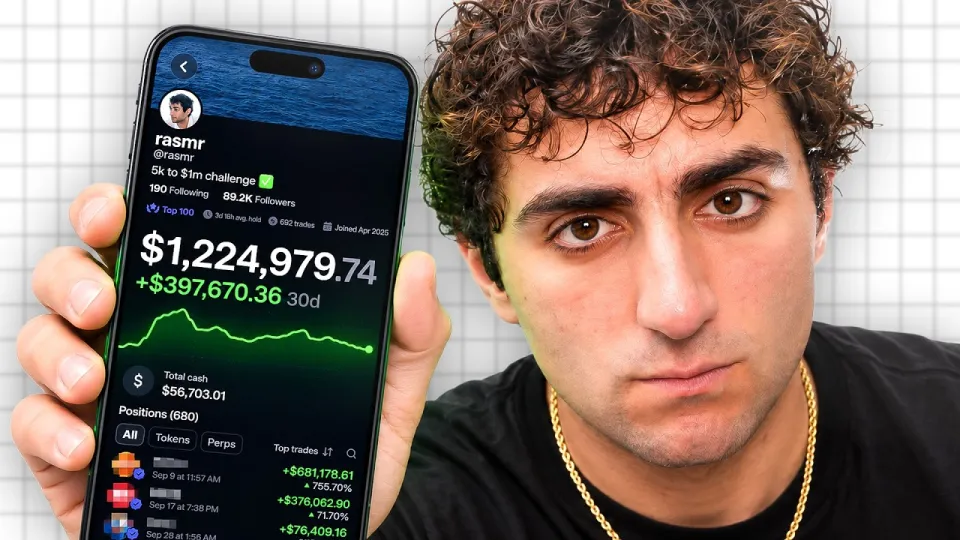
Video: 5 Years of Memecoin Knowledge in 12 Minutes
Want articles like this for your own video to promote it on YouTube and Google? Order them through the Telegram bot @sat_sit_bot. The bot writes and publishes the articles itself (with your YouTube video embedded) on popular topical websites (no ads). Try it free: 50 articles on us.
Meme coins are tokens with no cash flow, no product roadmap and no fundamental valuation model — their price is set almost entirely by narrative, attention and the flow of new buyers. Trading them profitably in 2026 means treating them as a attention market rather than an investment, sizing positions so a total loss is survivable, and deciding your exit before you enter; a trading account such as fomo.family registration is where most of that execution happens.
The breakdown below follows the framework popularised by the «rasmr» channel in its 12-minute distillation of five years of memecoin experience — the same questions his audience keeps raising in the comments.
What a meme coin actually is and why its price moves
A meme coin is a token whose value rests on a shared joke, a community or a trend rather than on revenue, and that is exactly why its chart behaves so differently from a large-cap asset. There is no earnings multiple to anchor the price, so the only thing that matters is whether new capital keeps arriving faster than existing holders sell.
That produces a few predictable properties:
- Narrative is the product. A coin tied to a live trend, a known figure or a fresh meta attracts buyers; a coin with a dead narrative bleeds out regardless of how good the chart looked last week.
- Liquidity is thin and exit is crowded. When a large holder decides to sell, the order book cannot absorb it quietly, and the price gaps down before most retail traders can react.
- Launch mechanics decide the first hours. Who deployed the token, how much supply the deployer holds, and whether the launch was announced privately before it went public explain most of the early price action.
- Unit price is meaningless. A token at $0.000001 is not «cheaper» than one at $0.10 — market cap and fully diluted valuation are the only comparable numbers.
Why emotions are the single biggest cost in memecoin trading
Emotion, not bad luck, is what turns a winning month into a losing one, and the most common patterns repeat across almost every new trader. The classic sequence is: buy because a chart is going up, watch it retrace, refuse to take a small loss because the position «has to come back», then average down into a token whose narrative is already dead.
The mirror image is just as expensive. A trader sits on an unrealised gain, feels invincible, and rides the position all the way back to entry — the round trip. Both behaviours share one root cause: the decision was made after the position was opened, not before.
The fix is mechanical, not psychological:
- Write down the invalidation level and the profit-taking levels before you click buy.
- Decide the position size in advance so that a 100% loss on it changes nothing about your month.
- Never add to a losing memecoin position on the assumption that it will recover.
- Take partial profits on the way up instead of trying to sell the exact top.
How to read a launch before the crowd arrives
Early entry in memecoins is mostly an information problem, not a chart-reading problem, because the people who make the largest gains usually knew about the token before it was public. In practice, launches are frequently announced first inside closed groups — the inner circles often called cabals — which are connected to the deployers and get the ticker and contract address before any public post exists.
For a trader outside those circles, the practical checklist before buying any new launch is:
- Who released the token. A known, repeat deployer with a track record is a different risk profile from an anonymous wallet with no history.
- Supply concentration. Check how much of the supply sits in the top wallets; a deployer holding a large share can exit into your buy.
- Liquidity and lock status. Thin liquidity plus unlocked developer tokens is the standard rug setup.
- Narrative timing. Ask whether the story is still accelerating or already fully priced in by the crowd.
- Social proof quality. Organic discussion in many places is different from a handful of coordinated accounts posting the same contract address.
None of these checks makes a launch safe. They simply filter out the setups where the odds are structurally against you.
Market cap levels and where holders usually start selling
Market cap, not price per token, is the map for planning exits, because it tells you how much money has to enter to move the coin higher. A token at a $2 million cap needs far less new capital to double than one at $200 million, and that asymmetry is the whole game in small caps.
A workable approach is to define tiers in advance. At the first target, sell enough to recover your initial capital. At the next, take another slice. Keep a runner only with money you are fully prepared to lose. The reason is simple: at higher caps, early buyers, the deployer and insider wallets typically begin distributing, and the buyer pool required to push further grows faster than the narrative usually can.
This is also the answer to the most common regret in memecoin trading — sitting on a seven-figure unrealised gain and giving it back. Unrealised profit is not profit; it is a quote that can disappear in minutes.
Position sizing and a written trading plan
A trading plan is what separates a repeatable process from gambling, and it can be written in five lines. Starting small with limited capital is not a disadvantage — it is the cheapest way to learn the mechanics while the cost of a mistake stays low.
A minimal plan looks like this:
- Capital allocated to memecoins: a fixed amount you can lose entirely without affecting your finances.
- Maximum per position: a small fraction of that allocation, so no single rug ends the experiment.
- Entry reason: the specific narrative or launch signal, written in one sentence.
- Exit rules: the market cap levels where you take profit and the level where you admit the thesis is wrong.
- Review: after each trade, note whether you followed the plan — not whether the trade made money.
Following the plan on a losing trade is still a success; breaking it on a winning trade is still a leak that will cost you later.
Common questions from newer memecoin traders
Newer traders tend to ask the same handful of things, and the answers are mostly about expectations rather than secret setups. One recurring theme is whether a coin tied to a forthcoming entertainment release, such as a game launch, is a good investment — the honest answer is that a token with no link to the actual product is a narrative bet, and narrative bets are timed, not held.
Another common theme is how to spot a rug before it happens. There is no reliable signal, but the combination of concentrated supply, unlocked developer tokens, thin liquidity and a deployer with no history covers most of the cases. A third theme is whether it is worth starting with small capital at all: yes, because the skills — reading market cap, sizing, exiting — transfer directly to larger size later.
Useful links
Final takeaways on trading meme coins
Meme coins reward discipline far more than conviction: the traders who survive are the ones who size small, decide exits before entry and refuse to let a green candle or a red one make the decision for them. Narrative and launch access explain the upside, while market cap tiers and mechanical profit-taking explain who keeps it. The «rasmr» channel condensed five years of that experience into a 12-minute format, and the underlying lesson is unglamorous — process beats prediction. If you want to put the framework into practice, you can register through the fomo.family link and start with a position size you can afford to lose.
Key takeaways
- Meme coin prices are driven by narrative and attention, not by fundamentals like revenue or cash flow.
- Market cap, not unit price, is the reference point for judging upside and planning exits.
- Emotional decisions — averaging down a loser, round-tripping a winner, chasing a green candle — are the main source of losses for new traders.
- Early entries usually come from seeing a launch before the public: private groups, insiders and cabals get the announcement first.
- Position sizing and a pre-written exit plan matter more than picking the perfect coin.
Source: 5 Years of Memecoin Knowledge in 12 Minutes · Markdown version
Questions & answers
Is a meme coin tied to a big upcoming game release a good investment?
Only as a narrative trade, not an investment. If the token has no official link to the game's developer or revenue, its price depends entirely on attention around the launch, which fades quickly. Size it like a lottery ticket and plan to sell into the hype rather than hold through it.
How can I tell if a memecoin is going to rug?
There is no certain signal, but concentrated supply in a few wallets, unlocked developer tokens, thin liquidity and an anonymous deployer with no track record cover most rug setups. Checking who released the token and how much of the supply the top wallets hold takes a couple of minutes and filters out many bad entries.
Why do traders give back large unrealised profits instead of selling?
Because the decision to sell was never made before the position was opened. Greed keeps the target moving upward, and by the time the chart turns, the exit feels like an admission of failure. Pre-defined market cap tiers for partial profit-taking remove that decision from the heat of the moment.
Is it worth trading memecoins with a small amount of capital?
Yes, provided the amount is money you can lose entirely. Small size lets you learn market cap behaviour, launch mechanics and your own emotional triggers at a low cost. The skills transfer directly if you later scale up, while the losses from learning with large size often do not.